
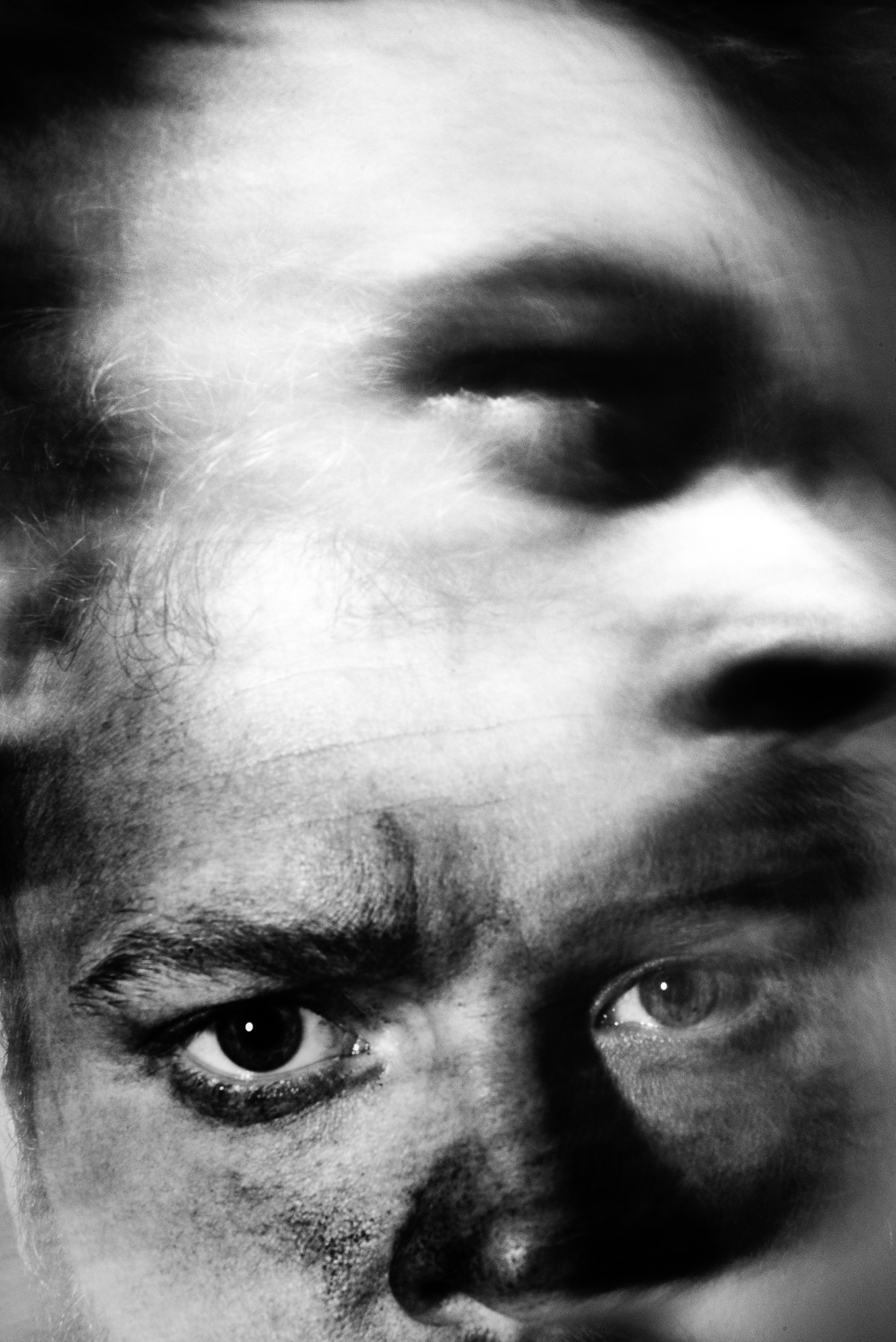
Bastien Deschamps (Paris, 1990) is a photographer and visual artist based in Montreuil.
After several years in the performing arts, he embarked on his journey in 2015 and dedicated himself entirely to photography. Awarded a scholarship by the Wall Street Journal, he studied at the International Center of Photography (ICP) in New York, where he graduated in 2019 from the Documentary Practice and Visual Journalism program.
His work is rooted in documentary photography, viewed not as a means of proof, but as a tool for exploring reality. Early on, this approach became geopoetic: a visual language at the crossroads of documentary, experimental, and poetic, where the aim is no longer merely to describe, but to evoke feeling. Through immersion, long-term engagement, and proximity to places and their inhabitants, he addresses social issues through the prism of raw emotion, questioning the power dynamics embedded in landscapes, borders, rivers, and marginal zones, where economic, ecological, and social decisions leave visible and invisible traces on bodies and territories.
This shift led him to question the very materiality of the image. The medium, the process, and physical transformation become bearers of meaning: some projects articulate a documentary dimension with a material dimension, as seen in his work on illegal gold mining in French Guiana, where issues related to gold and mercury extend into chemical processes, the alteration of surfaces, and the use of unstable or toxic materials.
Since 2020, he has been developing Where the Border Runs: Tales from the River Sides, a long-term project structured into five chapters along different border rivers worldwide. The first chapter, dedicated to the Evros (Turkey/Greece), was published in 2024 by Éditions d’une rive à l’autre. He is currently working on the second chapter, along the Maroni River in French Guiana.
In parallel, his research around Le poulpe au regard de soi(e) and the Swansong collective explores an ante-futurist thought: photography as a ground for confrontation between human gaze and calculated gaze, between the heritage of historical processes and contemporary technologies. Facing machines and artificial intelligence, he offers a radical critique of technical systems that claim to represent the world, or to replace it. These two axes, one rooted in the political fractures of reality, the other in the critique of technological imaginaries, constantly dialogue in his work.
Between photographic wandering, material experiments, and artist books, he shapes forms where the sensitive, the social, and the political converge.